
REVIEW · WASHINGTON DC
Tastes of Georgetown Food & History Small Group Walking Tour
Book on Viator →Operated by Blue Fern Travel · Bookable on Viator
Georgetown tastes like history on foot. This small-group walking tour strings together food stops with story stops, so you learn while you eat your way through DC’s oldest neighborhood. You’ll cover a few blocks at a time, hear the neighborhood context, and get inside tips on where to go next.
I especially like the food-for-lunch approach: you’re not just nibbling. Instead, the tastings are built to leave you satisfied, and the variety can swing from savory classics to something sweet like crème brûlée. I also like how guides bring the area to life—people have mentioned guides such as Joe, Neka, Lori, Mary, Soneka, and others for their energy and storytelling.
One thing to consider: this is food-forward. If you’re hoping for a heavier dose of history or lighter portions, the schedule may feel a bit much—some folks found the portions generous enough that they were close to full by the later stops.
In This Review
- Key highlights you’ll feel fast
- Georgetown on foot: why this tour makes sense
- Meeting on Grace Street—and how the pace actually feels
- The tasting stops: what you’re likely to eat (and why it’s planned this way)
- Stop style 1: a savory start that sets the tone
- Stop style 2: a classic crowd-pleaser (pizza, pasta, or similar comfort food)
- Stop style 3: a contrasting option that adds variety
- Stop style 4: dessert that actually lands
- Drinks: part of the meal feel
- The history you’ll hear: Georgetown’s stories tied to what you’re eating
- Vegetarian options—and the limits you should know up front
- Price and value: is $129 fair?
- What to do to enjoy it more (and not feel overfull or rushed)
- Should you book the Tastes of Georgetown Food & History Tour?
- FAQ
- How long is the Georgetown food and history tour?
- What is the group size for this tour?
- What’s included with the tour?
- Is there a vegetarian option?
- Can the tour accommodate vegan diets or dairy/gluten allergies?
- Where do I meet, and where does the tour end?
- What language is the tour in, and do I get a ticket on my phone?
- Are service animals allowed?
- Is there free cancellation?
Key highlights you’ll feel fast
- Small group (max 8): you get more personal attention and a more relaxed pace for questions.
- A true lunch feel: multiple tastings and drinks are designed so you leave properly fed.
- Georgetown stories tied to the places: the route connects neighborhood history to the restaurants you’re eating at.
- Locally rooted stops: the food partners are local owners and/or tied to historic relevance.
- Vegetarian option available: tell them when you book; vegan, dairy, and gluten allergy limits are noted.
Georgetown on foot: why this tour makes sense
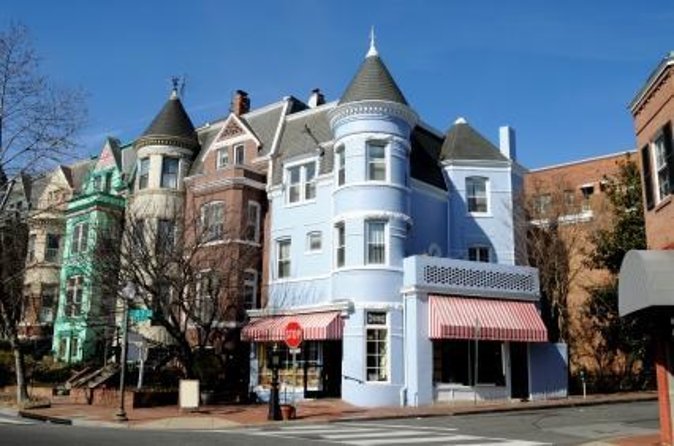
Georgetown can be a little like a choose-your-own-adventure. One corner looks elegant and calm. Another feels more lived-in and local. What’s cool about this tour is that you don’t just look around—you taste and walk, and the stories give you a reason for what you’re seeing.
The tour runs about 3 hours and keeps the group to 8 people. That matters more than you’d think. With a small pack, your guide can slow down when someone asks a question, and you’re less likely to get shuffled along like a cookie conveyor belt.
Also, the format is practical: you’ll walk between food stops, sometimes with food to go so you can keep moving through the neighborhood. That’s a smart way to manage a limited time window while still letting the experience feel like more than a quick “stop, eat, photo, repeat.”
You can also read our reviews of more walking tours in Washington DC



Meeting on Grace Street—and how the pace actually feels
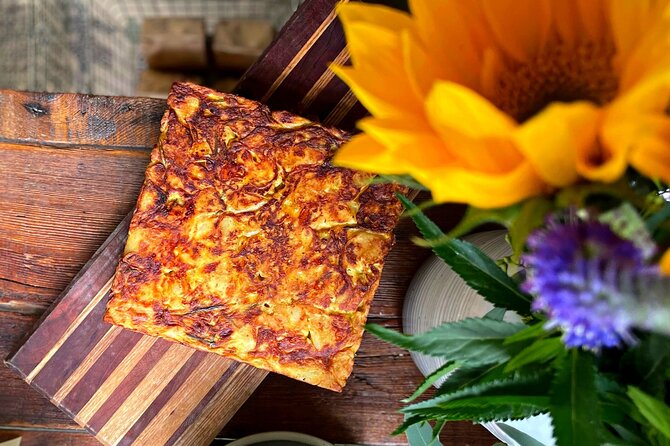
Your tour starts at 3210 Grace St NW and ends at 3251 Prospect St NW. Because there’s no hotel pickup, you’ll want to build in a few minutes to get there and settle your group.
The itinerary is built around a steady walking rhythm. It’s not a sprint, but it’s also not a seated lecture. You’re moving every so often, then pausing for tastings and short history moments tied to the restaurants. In other words: you’ll spend most of the time doing something, not waiting around.
Weather is another thing you can plan for. The tour is described as operating in all weather conditions and asks you to dress appropriately. So if you run hot and hate coats, check the forecast anyway—and bring whatever helps you stay comfortable.
And since the tour is near public transportation, you don’t have to make it a whole day of logistics. It’s easy to tack onto your Georgetown plans.
The tasting stops: what you’re likely to eat (and why it’s planned this way)

Even though the tour experience is framed as a Georgetown walking route, the heart of it is the sequence of tastings at different eateries. Multiple experiences point to about four food stops plus a sweet finish, and that pattern shapes the whole afternoon.
Here’s how to think about the stops, based on what’s consistently described across the experience:
Stop style 1: a savory start that sets the tone
The first part of the tour is where you get oriented. You’ll be in Georgetown—hearing neighborhood context as you go—and then you’ll begin with a tasting that kicks off lunch in a real way, not a “sample spoon” kind of way.
A common theme: the early savory bite helps you understand the neighborhood through food style—what locals reach for, what’s become part of Georgetown’s identity, and how the restaurants connect to the area’s story.
Potential downside: if you’re not hungry at the start, the rest of the tour can feel heavy later. One recurring comment is that portions can be large, so arrive ready to eat.
Stop style 2: a classic crowd-pleaser (pizza, pasta, or similar comfort food)
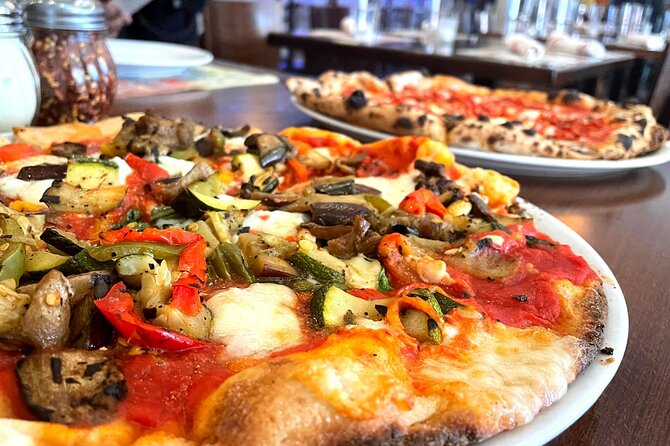
Mid-tour, you often hit a more classic, comfort-food entry point—think pizza or meatballs/pasta-style dishes. This is where the tour leans into the idea that Georgetown isn’t only “pretty streets.” It’s also a working food scene with regular favorites.
Why it works: this kind of stop is shareable, satisfying, and easy to build stories around—owners, neighborhoods, and local traditions.
What to watch: if you’re sensitive to very filling foods, keep an eye on portions. Some people felt full before the last stop.
You can also read our reviews of more food & drink experiences in Washington DC





Stop style 3: a contrasting option that adds variety
Another stop often shifts gears—examples mentioned include falafel and other lighter or street-food-style items. The goal is contrast: you get variety in flavor and texture so lunch doesn’t feel like one long repeat.
It’s also a smart pacing tool. Walking straight after a heavier course can feel rough, but a contrasting option can reset your palate.
One practical note: when sandwich-style items are involved, you may end up eating while walking or carrying your food briefly. That’s not a problem, just be ready for a casual feel rather than a sit-down meal.
Stop style 4: dessert that actually lands
Dessert shows up for a reason. You’ll finish with something sweet—crème brûlée is specifically mentioned—and that gives the tour a satisfying close.
Why it’s worth it: after several savory stops, dessert is a clean end-cap. It also helps you remember the day as a full “meal experience,” not just a history walk.
Possible drawback: if you’re already stuffed, dessert can feel like a lot. Some people made it work with doggy bags, but the logistics can feel a little awkward when you’re carrying food as a group.
Drinks: part of the meal feel
The tour is described as including drinks along with tastings. So you’ll likely get a more complete lunch vibe rather than a dry afternoon.
If you’re picky about beverages or have caffeine concerns, it’s worth planning for that day like you would any meal outing—don’t assume you can skip drinks without consequence.
The history you’ll hear: Georgetown’s stories tied to what you’re eating
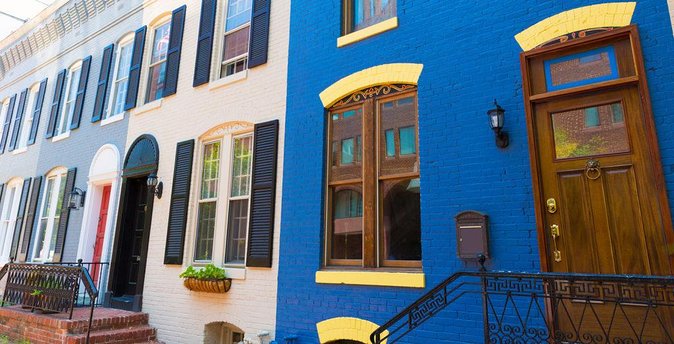
The history element is framed as stories about DC’s oldest neighborhood, delivered along the route. This isn’t a museum tour. It’s more like: you’re walking, you stop, you eat, and your guide threads the context into the places.
What kind of stories come up? People have highlighted details such as:
- ties to Georgetown University
- scandals and mysteries
- personality and local characters tied to the neighborhood
- small “tidbits” (like Kennedy-related notes) mixed into the flow
Guides get named often in positive notes. You’ll hear mentions of Joe, Neka, Lori, Me a, Sonya, Richard, Jim, Jenn, Vanesa, Mika, Mary, and Soneka. Even if your guide isn’t one of those, the pattern is consistent: active storytelling, humor, and a guide who makes the route feel like it has a point.
Balanced expectation: some people wished there was more history. That usually comes down to personal preference—this tour is built to feed you and to connect history to food stops. If you want hours of chronology, you might find this feels like “history plus lunch,” not “history lecture.”
Vegetarian options—and the limits you should know up front
This is one of the biggest decision points for the tour.
- Vegetarian option is available—you should advise at booking.
- The tour cannot accommodate vegan diets.
- The tour also notes it cannot accommodate dairy or gluten allergies on this Georgetown tour.
That last line is important. If you have dairy or gluten allergy needs, you should assume the standard route tastings may not be adjustable.
Also, the tour asks you to mention vegetarian status and food allergies/dietary restrictions at the time of booking. That suggests they try to work within the available offerings, but the vegan and dairy/gluten allergy limits are explicit.
If your diet fits within those boundaries, you’re in good shape. If it doesn’t, it may be worth choosing a different tour style that can meet your restrictions.
Price and value: is $129 fair?

At $129 per person for about 3 hours, this tour sits in the “mid-to-higher” range for walking food tours. The question is: what are you buying beyond the snacks?
Here’s what makes the pricing make sense for many people:
- You’re paying for a small group (max 8), not a crowd experience.
- You get multiple tastings and drinks, designed to feel like lunch.
- The tour emphasizes local restaurant partnerships, including local owners and places tied to historic relevance.
- The company response notes that they pay full price for every tasting and tip servers 20%.
- It also states that a portion of each ticket supports Bread for the City, a community organization that provides meals.
So the value isn’t just “food cost.” It’s also time (3 hours), guide-led storytelling, and the “real-world economics” of supporting local restaurants at full price.
Now, the balanced truth: a few comments call the price not worth it compared to other food tours. Usually that complaint boils down to two factors:
1) expectations around the amount of history, and
2) whether the food volume and dining level matched what someone wanted.
If you go in expecting a serious lunch experience with short, story-based Georgetown context, the price feels easier to justify. If you’re hoping for more history per minute or smaller, lighter portions, you might feel the cost more sharply.
What to do to enjoy it more (and not feel overfull or rushed)
This tour’s biggest “secret” is that it’s built like a meal, not like an appetizer crawl. So plan like it.
A few practical moves that help:
- Eat before you go only lightly. If you arrive hungry, you’ll be happier. If you arrive stuffed, dessert and later tastings can feel like a chore.
- Wear comfortable walking shoes. You’ll be on your feet between multiple eateries.
- Ask about portion pace early. If you have concerns about being overfull, bring it up at the start.
- For allergies or dietary needs, be specific at booking. The tour’s dairy/gluten and vegan limits are strict, so you need clarity before you arrive.
- Bring a question. With a small group, your guide can answer questions about Georgetown life, not just recite dates.
Also, keep an eye on how you handle leftovers if they come up. Some people found the carry-and-store part a little awkward. If you think you’ll want to save food, plan for it in your mind before you set out.
Should you book the Tastes of Georgetown Food & History Tour?
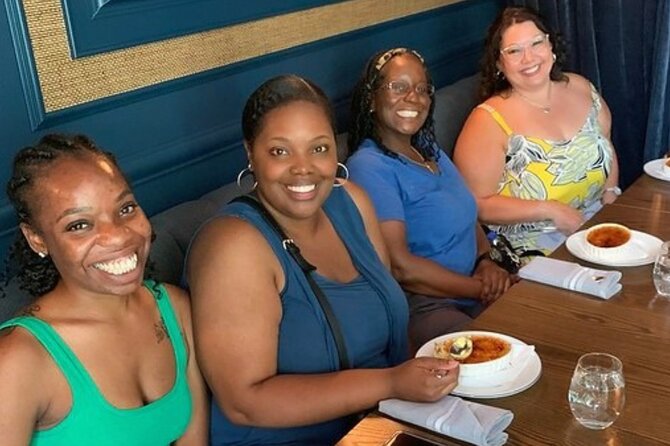
Book it if you want a friendly, small-group Georgetown walk where food and neighborhood stories are tied together. It’s a great choice when you want to leave full, not just informed. The combination of local restaurant stops, guide energy, and the lunch-style tastings works especially well for first-time Georgetown visits.
Skip or rethink it if:
- you need a tour that can handle vegan needs or dairy/gluten allergies (this one can’t on this Georgetown route),
- you’re looking for a more history-heavy experience with less focus on eating,
- or you prefer smaller portions and a lighter touch.
If you’re deciding this week, book sooner rather than later. The tour is commonly reserved about 26 days in advance, so popular times can move fast.
FAQ
How long is the Georgetown food and history tour?
It runs for about 3 hours (approximately 3–3.5 hours on the walk).
What is the group size for this tour?
This is a small-group tour with a maximum of 8 travelers.
What’s included with the tour?
The tour includes lunch, historical neighborhood information, a local guide, and tastings (and described as including drinks).
Is there a vegetarian option?
Yes. A vegetarian option is available, and you should advise them at booking.
Can the tour accommodate vegan diets or dairy/gluten allergies?
No. The tour specifically notes it cannot accommodate vegan diets and cannot accommodate dairy or gluten allergies on the Georgetown tour.
Where do I meet, and where does the tour end?
Meet at 3210 Grace St NW, Washington, DC 20007. The tour ends at 3251 Prospect St NW, Washington, DC 20007.
What language is the tour in, and do I get a ticket on my phone?
The tour is offered in English, and it uses a mobile ticket.
Are service animals allowed?
Yes. Service animals are allowed.
Is there free cancellation?
Yes. You can cancel for a full refund up to 24 hours before the experience. If you cancel less than 24 hours before, the amount paid is not refunded.