REVIEW · WASHINGTON DC
Smithsonian Museum of Natural History Small Group Tour: 8ppl Max
Book on Viator →Operated by Babylon Tours DC · Bookable on Viator
Natural history, told fast and made fun. In just two hours, this Smithsonian Natural History small-group tour helps you hit the museum’s biggest crowd-pleasers and make sense of what you’re looking at, from the Hope Diamond to ancient Egypt. I especially love the tight route through a place so large it’s measured in football fields, and I like having an expert art historian guide keeping things moving and understandable. One consideration: you’re seeing major highlights, not the entire museum, so plan to explore on your own afterward if you want everything.
The payoff is the maximum of 8 people. That size makes it realistic to ask questions, get pointed toward the best viewpoints, and not spend your whole time fighting crowds or getting lost. It also matters that the museum admission itself is free for this tour, so your fee mainly goes to expert guiding and time savings.
In This Review
- Key things to know before you go
- Smithsonian Natural History Highlights in 2 Hours: Why This Format Works
- Where the Tour Starts and How to Get There Without Stress
- Inside the Smithsonian: 18 Football Fields of Natural History
- Stop 1: The Hall of Gems, Minerals, and the Hope Diamond Moment
- Ancient Egypt Mummies: Learning Death Rituals in a Real-world Museum Setting
- Wildlife in Motion: Polar Bears, Elephants, and Giraffes
- Ocean Hall: Live Coral Reef and Phoenix, a 45-ton Whale Replica
- Price and Value: Is $89.67 Worth It?
- Meeting Point Rules, Quiet Rooms, and Bag Security
- Who This Tour Suits Best (and Who Might Skip It)
- Should You Book This 2-Hour Smithsonian Natural History Small Group Tour?
- FAQ
- How long is the Smithsonian Natural History small group tour?
- Is museum admission included in the tour price?
- What is the maximum group size, and is the tour in English?
- Where does the tour meet, and where does it end?
- Does the tour include hotel pickup or drop-off?
- Are there restrictions on bags or luggage inside the museum?
- Is there free cancellation?
Key things to know before you go
- 8-person max keeps the tour personal and makes Q&A actually work.
- You’ll cover themes across the museum, not just one wing: gems, Egypt, wildlife, and the ocean.
- Hope Diamond (46 karats) and the Dom Pedro Aquamarine are built into the main route.
- Ocean Hall includes a live coral reef exhibit plus Phoenix, a 45-ton whale replica.
- The tour lasts about 2 hours, so it’s great for first-timers and tight schedules.
Smithsonian Natural History Highlights in 2 Hours: Why This Format Works
If you’ve ever tried to visit the Smithsonian National Museum of Natural History without a plan, you already know the problem. The building is huge. The exhibits are deep. And after an hour, you’re doing that thing where you stand in front of something amazing and then forget to look closer because you’re trying to keep your bearings.
This tour’s format solves that. It gives you a guided route that connects big ideas across collections, so you’re not just collecting photos. You’re learning the logic behind why certain objects are famous, how they’re displayed, and what they’re meant to teach.
Price helps too. At $89.67 per person for about two hours, you’re not paying for museum entry (admission is free for this experience). You’re paying for a professional guide and a route that keeps you from wasting time crisscrossing the building.
Also, the small group limit matters more than it sounds. With up to 8 people, you’re less likely to get stuck behind a crowd. You’re more likely to hear what the guide is pointing out. And you’re more likely to get answers to the questions that pop up when kids (or adults) start asking why something is shaped that way.
You can also read our reviews of more historical tours in Washington DC


Where the Tour Starts and How to Get There Without Stress
The meeting point is 1010 Madison Dr NW, Washington, DC 20004. The tour ends back there, so you don’t have to figure out a second location.
Hotel pickup is not included, so I’d plan to handle your own ride. The tour notes you can use Uber or taxi. If you’re staying nearby, you can also use public transportation since the location is near it.
Before you head out, do two practical things:
- Confirm you have a working mobile phone number (with country code) for the booking.
- Keep your bag situation simple. No large bags or suitcases go inside the museum. Only handbags or small thin bag packs are allowed through security.
This is the kind of rule that changes your experience fast. If you show up with a big bag, you’ll burn time at security and feel rushed all tour. If you show up with a small bag, you’ll start calmly and stay calm.
Inside the Smithsonian: 18 Football Fields of Natural History
The tour centers on the National Museum of Natural History, a massive building so large it’s described in football-field terms (18 fields worth of space). That number sounds silly until you’re inside and realize you can’t possibly “wing it” the whole museum in two hours.
Instead, the guide leads you through a curated path of major stops. You’ll move from mineral and gem displays to ancient Egypt mummies, then pivot to wildlife, and finally end up at the Ocean Hall.
What I like about this structure is that it mirrors how many people naturally think about nature:
- Earth starts with rocks and materials.
- Life (and sometimes death) enters through humans and animals.
- Oceans and ecosystems broaden the story.
You get a guided sense of the museum’s “map,” not just a checklist of objects.
One more practical note: the tour mentions occasional closures and changes in collections depending on the time of year. If opening delays happen and the delay passes a threshold, you’ll be offered an alternative. That’s worth keeping in mind if you’re traveling during peak periods when museums sometimes reshuffle access.
Stop 1: The Hall of Gems, Minerals, and the Hope Diamond Moment
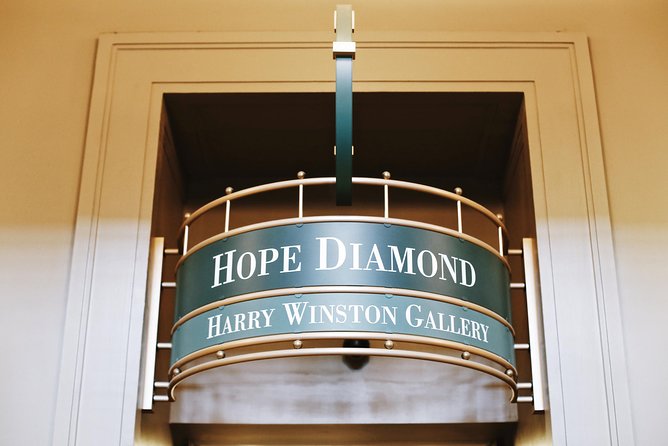
The first major draw is the museum’s gem-and-mineral highlights, with the Hope Diamond front and center.
This isn’t just a famous-looking blue rock. The tour focuses on why the Hope Diamond is so attention-grabbing: it’s brilliant blue, famously large at 46 karats, and its story involves ownership by Marie Antoinette (as part of its well-known history). Whether you care about royalty or not, it works as a storytelling anchor. Once you understand why it’s famous, the rest of the gem hall clicks into place.
Then you’ll move to gems like the Dom Pedro Aquamarine, described as the world’s largest gem of its type. The key here isn’t just scale. The tour includes how it’s displayed so it appears to glow from within. That’s important because aquamarine is one of those stones where color can look flat in photos. In person, under the museum lighting and with the right angle, it reads differently.
If you’re traveling with kids, this is also where you often get the best reactions. Diamonds and huge gemstones are easy to understand. They look impressive from far away. And they make the rest of natural history feel less intimidating.
Possible drawback to keep in mind: this tour is timed. So while you’ll get the most important points, you won’t linger for an hour-long close-up study. If you’re the type who wants to read every label, plan extra time on your own later.
Ancient Egypt Mummies: Learning Death Rituals in a Real-world Museum Setting
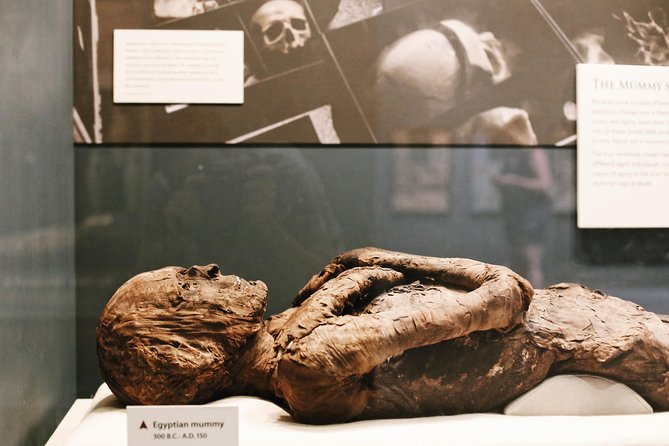
After the gem focus, the tour shifts into ancient Egypt, specifically mummies and what they reveal about death rituals.
This stop has a different tone than the mineral halls. It’s less about sparkle and more about meaning. The tour takes you through displays that connect real artifacts to how people understood death. That’s the kind of museum experience that can feel heavy, but it’s also the kind that gives you context fast. Instead of random facts, you get a guided narrative.
I like that the tour doesn’t treat Egypt as a standalone “cool” section. It makes it part of a bigger museum idea: natural history is not only animals and rocks. It includes human history, preservation, and how cultures interact with materials and the body.
There’s also a practical in-museum detail to be aware of. The tour notes that some rooms can be very quiet or have restricted speaking. In those spots, the guide will tell you what you need before you enter. That’s a smart way to keep the experience respectful while still keeping you from missing key information.
You can also read our reviews of more museum experiences in Washington DC




Wildlife in Motion: Polar Bears, Elephants, and Giraffes
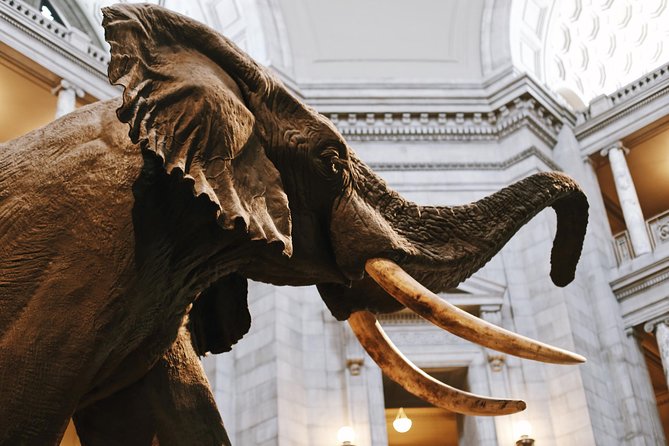
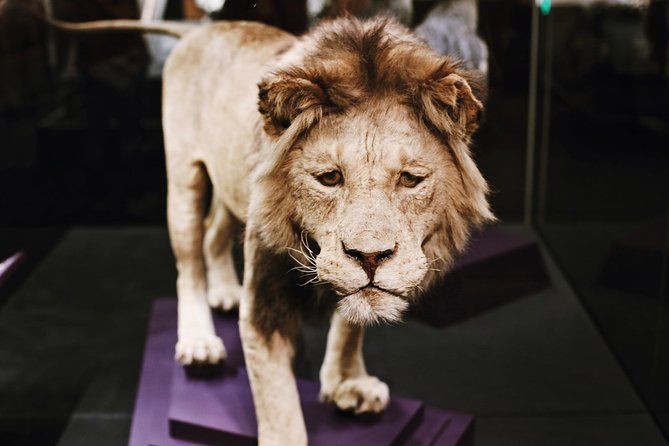
From Egypt, the tour jumps to the wild side, with wildlife displays featuring polar bears, elephants, and giraffes.
This is where the museum’s strengths as a public-facing natural history institution shine. You don’t need to know scientific jargon to get the appeal. Large animals grab attention instantly, and they give your brain a break after the heavier Egypt content.
More importantly, the wildlife stop helps you understand how the museum organizes “living nature.” You’re not only seeing animals. You’re seeing how museums present evidence: scale, posture, habitat ideas, and the story the display is trying to tell.
If you’re visiting with younger kids, this is often the moment where the tour stops feeling like “walking through exhibits” and starts feeling like an adventure. Big animals are easier for kids to track with their eyes, and it gives the guide room to make the talking points lively.
Ocean Hall: Live Coral Reef and Phoenix, a 45-ton Whale Replica
Finally, you get to the Ocean Hall, which is a standout because it mixes live elements with massive scale.
The tour includes two big attractions:
- A live coral reef exhibit
- Phoenix, a 45-ton whale replica tied to the museum’s tracking of what it says is a real living whale
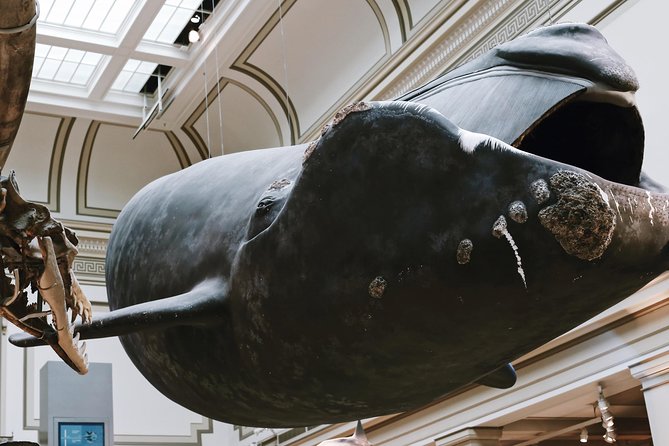
Even if you’re not a marine biology person, this stop lands because it’s sensory. Coral reefs are visual and motion-rich. And a 45-ton whale—whether you’re standing next to it for photos or simply staring in disbelief—forces you to confront scale.
The guided element matters here too. Without a guide, you might walk around oceans quickly because you assume you’ve “seen it.” With a guide, you’re more likely to notice what makes this setup unusual: the live exhibit component and the way a replica can still tell a meaningful story.
Price and Value: Is $89.67 Worth It?
Let’s do the simple math mindset first. You pay $89.67 per person, and the tour is about two hours. Museum admission is free for the experience.
So what are you actually buying?
- A professional art historian guide
- A structured route that covers major highlights without wasting time
- A small group setup that keeps you from feeling swallowed by crowds
Is that worth it? In my view, it is if:
- You’re short on time in DC.
- This museum is a “must see” and you want the most efficient path.
- You want someone to explain what you’re looking at rather than just reading placards at your own pace.
It might not be worth it if:
- You already have a detailed plan for the museum’s sections and you love wandering.
- You’re the kind of visitor who wants to spend lots of time on one wing and read every label.
But for most people, two hours guided beats trying to build an intelligent route from scratch while you’re standing inside an enormous building.
Meeting Point Rules, Quiet Rooms, and Bag Security
Some of the details that affect your experience are annoyingly practical. Here they are, in plain language, because they matter:
- Expect moderate walking. Wear comfortable shoes and plan for it.
- Bring comfortable clothing appropriate for museum entry. The tour notes that appropriate dress is required for some sites.
- Security is real. No large bags or suitcases are allowed. Only handbags or small thin bag packs.
- Some rooms may involve quiet or restricted speaking. The guide will explain what you need before entering those spaces.
- Lines can happen. Even with potential skip-the-line or no-wait access at some attractions, the note says lines may still form depending on security.
None of this is meant to scare you. It’s just the stuff that keeps your day smooth. The better you follow these rules, the more you’ll enjoy the actual museum stops.
Who This Tour Suits Best (and Who Might Skip It)
This is a smart fit if:
- You want a first pass through the museum’s biggest highlights.
- You’re visiting as a couple or family and want a guide to keep interest high.
- You’re curious about multiple themes: gems, Egypt, wildlife, and ocean life.
- You like having a guide who can answer questions without the tour feeling like a school field trip.
It’s not ideal if:
- You need specific assistance for walking disabilities or wheelchair use, since the tour doesn’t include accommodations for that. If you have mobility needs, it’s worth checking before booking.
- You’re hoping for a private, ultra-custom museum crawl. This is a small group, but it follows a planned route.
Should You Book This 2-Hour Smithsonian Natural History Small Group Tour?
I’d book it if you want the best use of limited time and you prefer guided context over aimless roaming. The combination of a max 8-person group, a professional art historian guide, and major anchors like the Hope Diamond (46 karats) and Ocean Hall’s live coral reef plus Phoenix makes the experience feel efficient without feeling rushed.
Skip it if you have plenty of time and you enjoy building your own route. But if your DC schedule is packed, this tour is one of the cleanest ways to get oriented fast and leave knowing what you saw and why it matters.
FAQ
How long is the Smithsonian Natural History small group tour?
The tour is about 2 hours.
Is museum admission included in the tour price?
Yes. The tour notes that admission ticket is free.
What is the maximum group size, and is the tour in English?
The tour has a maximum of 8 travelers and is offered in English.
Where does the tour meet, and where does it end?
It meets at 1010 Madison Dr NW, Washington, DC 20004 and ends back at the same meeting point.
Does the tour include hotel pickup or drop-off?
No. Hotel pickup or drop-off is not included.
Are there restrictions on bags or luggage inside the museum?
Yes. Large bags or suitcases are not allowed inside the museum. Only handbags or small thin bag packs are allowed through security.
Is there free cancellation?
Yes. You can cancel up to 24 hours in advance for a full refund. If you cancel less than 24 hours before the start time, the amount paid is not refunded.