REVIEW · WASHINGTON DC
Washington DC History of Slavery Walking Tour
Book on Viator →Operated by DC Slavery Tours · Bookable on Viator
DC keeps quiet lessons in plain sight. This 1-hour walk links everyday DC landmarks to the history of slavery that standard sightseeing often skips, guided by an academic specialist. I like that the stops are short, intentional, and you get context instead of a rushed photo sprint.
I also love the teaching style. Guides such as Dr. Koura and Dr. Gibson are described as personable and passionate, with a classroom feel that moves through street-level details, quick prompts, and even small check-in questions to keep you thinking as you walk. It’s the kind of tour where you finish with better mental maps of the city.
One drawback to consider: the walk is heavy on explanation and storytelling, and some parts focus on what you’re learning rather than lots of big, physical “wow” sights. If you prefer only hands-on viewing, you may find you want more time at each location.
In This Review
- Key highlights in plain English
- Slavery history in DC is all around you
- Price and how the 1-hour private format fits
- Lafayette Square: the first stop sets the tone
- Decatur House and the Slave Pen stop
- A brief National Mall pause near Washington Monument
- C&O Canal near Constitution and 17th: labor in the built environment
- Finish at the National Museum of African American History and Culture exterior
- The guides matter: Dr. Koura and Dr. Gibson’s teaching style
- Walking pace, stops, and what you’ll actually do
- Who this tour suits best
- Who might want to adjust expectations
- Quick practical tips before you go
- Should you book this slavery-history walking tour?
- FAQ
- How long is the Washington DC History of Slavery walking tour?
- How much does the tour cost?
- Where does the tour start and end?
- Is this tour private?
- Is the tour in English?
- Does it include tickets or admission?
- Is there a mobile ticket?
- What if the weather is bad?
- FAQ
- Are service animals allowed?
- Is the tour near public transportation?
- Is the tour suitable for most people?
Key highlights in plain English
- Lafayette Square to Decatur House connects public landmarks with the mechanics of slavery
- Slave Pen stop at Decatur House keeps the focus on lived reality, not vague history
- C&O Canal lock area adds a lesser-mentioned angle on the city’s growth and labor
- National Mall pause near Washington Monument helps you connect federal DC space to its past
- African American museum exterior gives you a powerful finish at the architecture’s doorstep
Slavery history in DC is all around you
DC is built for monuments and big statements, but slavery is harder to see unless someone points it out. This walk is designed to do that work for you, using specific locations where the past is tied to the layout of the city.
What makes it interesting is the way the tour stitches themes together. You’re not just hearing dates. You’re learning how the city’s power, commerce, and institutions connected to forced labor, and why those chapters tend to get left out of casual history tours.
You can also read our reviews of more walking tours in Washington DC



Price and how the 1-hour private format fits
At $40 per person for about 1 hour, this is a value play if you want guidance without spending half a day. The price also includes all fees and taxes, and the key stops are listed with free admission tickets for what the tour covers.
Because it’s private, you’re not competing with strangers for space or for the guide’s attention. That matters on a topic that benefits from questions and back-and-forth, especially if your group includes teens or someone who wants more detail.
One practical note: private transportation is not included. So you’ll be walking and/or using public transit to get between stops, which is normal for a walking tour in central DC.
Lafayette Square: the first stop sets the tone
The tour begins at Lafayette Square, at the corner of Pennsylvania Ave NW and 16th St NW. The guide uses this spot to examine the history of slavery connected to the area, and it works well as an opener.
Ten minutes here sounds short, but it’s the right kind of short. It’s meant to get your attention on the fact that DC’s public spaces have layered meanings, even when they look neutral or “touristy.”
If you’re the type who likes context fast, this first stop will feel like a smart warm-up. If you need more time for photos or lingering, just know the tour is paced for learning over wandering.
Decatur House and the Slave Pen stop
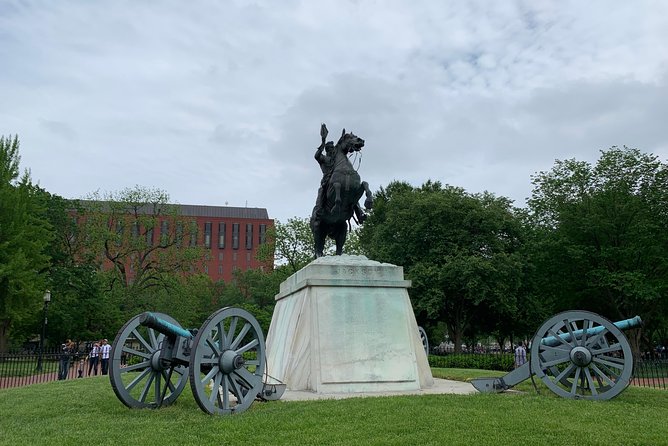
Next up is Decatur House, centered on the Slave Pen. This is the stop where the tone turns most direct, because you’re focusing on the human reality behind the words you might have learned in school.
Ten minutes can still feel intense, and that’s not a bad thing here. A compact stop helps you carry the lesson forward into the rest of the walk, instead of trying to absorb everything in one location.
The best way to get value out of this stop is to listen for connections the guide makes—how the setting ties to the broader DC story. If you ask a question, this is also a good moment, because the site theme makes it easier to understand what you’re hearing.
A brief National Mall pause near Washington Monument
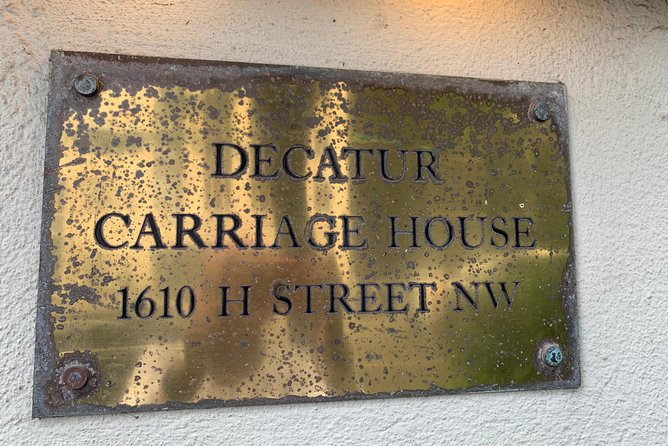
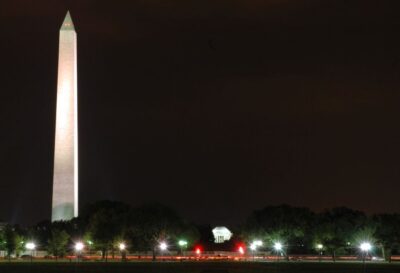
Then the tour heads to the National Mall for a brief stop near the Washington Monument. This is a short waypoint, but it’s useful because it places slavery history into the same geography as the symbols people usually associate with national identity.
Think of it as a “contrast check.” You’re watching how the guide reframes the meaning of major spaces by tying them to the lives and labor that helped build the federal city.
Because the stop is only about ten minutes, you won’t have time to treat the Mall like a separate sightseeing day. You’ll get the lesson, then you’ll move on.
You can also read our reviews of more historical tours in Washington DC






C&O Canal near Constitution and 17th: labor in the built environment
At the C&O Canal, the tour focuses on the lockhouse area at Constitution & 17th. Ten minutes here works because the canal is one of those DC features people pass without thinking about how the city functioned.
This stop is valuable for a reason beyond scenery. It adds a layer of how movement, transport, and work shaped daily life and economic growth, which in turn connects back to forced labor and the people who were exploited for it.
If you like history tied to physical infrastructure—waterways, streets, structures—this is one of the stops that will likely stick with you. Wear your walking shoes, because the tour’s overall pace assumes you’ll be on your feet.
Finish at the National Museum of African American History and Culture exterior
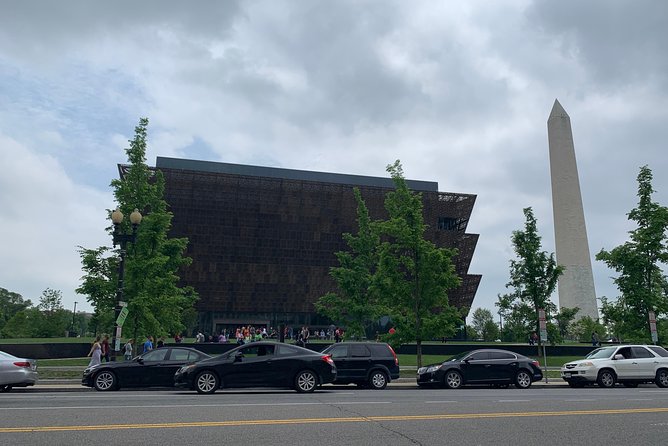
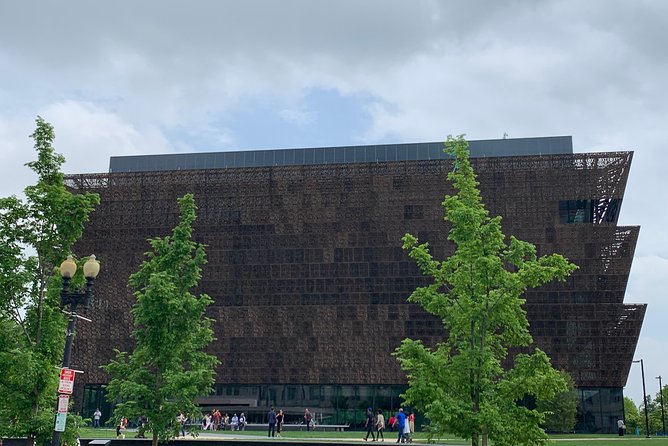
The tour ends at the National Museum of African American History and Culture. You’ll focus on the outside architecture of the building, finishing around the southeast corner at 15th St.
This ending choice is smart. Even without going inside, the museum’s design sets a strong emotional and educational landing. It gives you a “now what” feeling, like you’ve arrived at a place built to tell the stories you just heard referenced in the streets.
It also works for practical timing. You can decide on the spot whether you want to continue with museum time, grab a snack nearby, or simply walk it off after an hour of heavy listening.
The guides matter: Dr. Koura and Dr. Gibson’s teaching style
The biggest reason this tour earns such high ratings is the person delivering it. Guides named in the experience include Dr. Koura and Dr. Gibson, and both show up as the kind of teachers who bring both knowledge and energy to the sidewalk.
In particular, I love when a guide turns the tour into a conversation. Some participants describe the guides as very personable and engaging, and they also mention teaching techniques like light quizzes and quick prompts. That keeps you from drifting into passive listening.
You should also be aware that visuals may be part of the experience. One description notes visuals sent by text messaging during the walk. If you’re the type who likes to see references as you go, that can be a helpful extra layer. If you don’t use your phone much on trips, plan for that.
Walking pace, stops, and what you’ll actually do
This is not a sit-down lecture and not a long hike. The structure is a sequence of short stops—each around ten minutes—with walking between them.
A pace like this is ideal for groups who want learning without burning an entire day. It also helps with attention. After a stop, you move to the next location quickly, which reinforces the geography.
Still, you’re doing an urban walk in DC. If you’re traveling with kids or anyone who tires easily, it helps to wear comfortable shoes and have water ready. The tour duration is only about an hour, but the topic can make you want to pause and ask questions.
Who this tour suits best
This walk is a great fit if you want to understand DC with your eyes open. If you’ve visited monuments before and felt like something important was missing, this tour directly targets those gaps.
It’s also a strong choice for families and couples who want a guided experience that doesn’t feel like a standard bus tour. People mention bringing teens and learning new perspectives on African and African American influence in shaping the nation’s capital.
Finally, if you like an academic specialist approach—explained clearly, tied to specific locations—this format will feel productive, even in a short time window.
Who might want to adjust expectations
Because the tour is structured around interpretation, not just sightseeing, it may not satisfy every style. If you expect large amounts of on-site artifacts or extended time at every location, consider that the stops are short and the main value is the guidance.
Also, since some descriptions mention phone-based visuals and a focus on named individuals, this is best for people who are comfortable processing information while walking and listening.
If that sounds like you, great. If you prefer more museum time over street storytelling, you might want a different option that is more hands-on.
Quick practical tips before you go
- Bring comfortable walking shoes, because you’ll be moving between all stops.
- Have your phone ready for mobile ticket use.
- Plan to use public transit or walk to/from the start and end points since private transportation is not included.
- If weather looks rough, you’ll want to expect the tour to be weather-dependent.
Should you book this slavery-history walking tour?
Yes, if you want a focused, guided way to see DC differently in just one hour. The route hits key points—Lafayette Square, Decatur House and the Slave Pen, a Mall reference near Washington Monument, the C&O Canal lock area, and the African American museum exterior—and ties them together with clear teaching.
You should also book if you care about getting beyond generic narratives. The best-rated parts are the guide-driven explanations and the energy of instructors like Dr. Koura and Dr. Gibson, which make hard topics easier to understand without making them feel vague.
Skip it only if you strongly prefer tours with lots of physical exhibits to view for long periods. This one is about what you learn while standing in the city.
FAQ
How long is the Washington DC History of Slavery walking tour?
It’s listed as about 1 hour.
How much does the tour cost?
The price is $40.00 per person.
Where does the tour start and end?
It starts at Lafayette Square at Pennsylvania Ave NW & 16th St NW, Washington, DC. It ends at the National Museum of African American History and Culture at the southeast corner around 15th St.
Is this tour private?
Yes. It’s a private tour/activity, and only your group participates.
Is the tour in English?
Yes, it’s offered in English.
Does it include tickets or admission?
All fees and taxes are included, and the listed stops show free admission tickets for those locations.
Is there a mobile ticket?
Yes, it includes a mobile ticket.
What if the weather is bad?
The experience requires good weather. If it’s canceled due to poor weather, you’ll be offered a different date or a full refund.
FAQ
Are service animals allowed?
Service animals are allowed.
Is the tour near public transportation?
Yes, it’s near public transportation.
Is the tour suitable for most people?
Most travelers can participate.