REVIEW · WASHINGTON DC
The History of Black Georgetown
Book on Viator →Operated by Off the Mall Tours · Bookable on Viator
Georgetown has another story to tell. I love how this Black Georgetown tour ties together everyday streets with the slave trade that took place at the port area, using real neighborhood landmarks instead of textbook-style stops. You get a view of Georgetown that feels local and grounded, not like a museum script.
I also really like the pacing and the human touch. Guide Katie is described as well read and personable, and the small-group setup (up to 20) keeps the walk from feeling like a cattle line.
One possible drawback: it’s still a walking tour. If you want long sit-down breaks or expect coffee included, you’ll need to plan ahead—Thomas Sweet is the one scheduled refreshment and bathroom stop.
In This Review
- Key things you’ll notice on this tour
- Black Georgetown’s story starts with real places on O St NW
- Timing, route flow, and what to do with your 2–2.5 hours
- Stop 1: Healy Hall and Patrick Healy’s Gothic Georgetown footprint
- Stop 2: Pomander Walk, Bell’s Court, and the alleyway community model
- Stop 3: Thomas Sweet for a breather and a bathroom reset
- Stop 4: 3146 O St NW and the idea of holding pens
- The Emma Brown stop: education leadership in Georgetown’s orbit
- Stop 5 and 6: Mount Zion United Methodist Church and Rose Park rallies
- Stop 7: The Mount Zion and Female Union Band Society Cemeteries
- Guide quality and the small-group feel (Katie’s pacing really matters)
- Price and value: why $30 feels fair for a 2–2.5 hour story walk
- Who should book this Black Georgetown tour—and who might skip it
- Should you book Black Georgetown: The History Tour?
- FAQ
- How long is the Black Georgetown walking tour?
- How much does the tour cost?
- Where does the tour start?
- Where does the tour end?
- Is the tour offered in English?
- Is there a bathroom and refreshment stop?
- Is coffee or tea included?
- How big is the group?
- Is free admission included at the stops?
- What’s the cancellation policy, and does weather affect the tour?
Key things you’ll notice on this tour
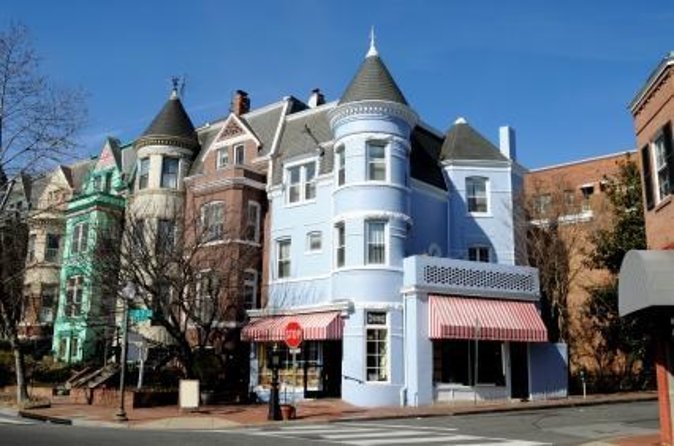
- Georgetown University history through Healy Hall tied to Patrick Healy
- Pomander Walk’s former Bell’s Court and the idea of close-knit alley communities
- A scheduled break at Thomas Sweet for refreshment and bathrooms
- O St NW holding pens tied to the enslaved people and later tearing-down of the structures
- Old Mount Zion institutions—church, Rose Park rallies, and cemetery grounds
- A guide-led, small-group experience with personalized pacing
Black Georgetown’s story starts with real places on O St NW
A lot of Georgetown sightseeing is about power—presidents, big buildings, official monuments. This tour flips the lens to show how Black Georgetown lived, worked, worshiped, organized, and fought back in the same spaces you’ll see on any other walk.
What I liked most is that the story doesn’t float in the air. It sits at specific addresses and recognizable landmarks. Even if you know the basics of DC history, you’ll likely be surprised by how much of it is written into the neighborhood itself.
And yes, it includes the hard parts. You’ll learn about the slave trade connected to the port, plus local evidence tied to enslaved people in Georgetown. It’s educational, but it’s also about place—how communities formed around streets, churches, schools, and meeting spots.
You can also read our reviews of more historical tours in Washington DC


Timing, route flow, and what to do with your 2–2.5 hours
This is built to fit into a morning or afternoon block: about 2 to 2.5 hours of walking and storytelling. It starts at 3206 O St NW and ends at the Mount Zion and Female Union Band Society Cemeteries area on 2501 Mill Rd NW.
The route is arranged with short stops, so you’re not standing still for long stretches. Each landmark is given about 10 minutes, with a longer break at Thomas Sweet. That matters because you can keep your energy up and still absorb what’s being explained.
Practical note: coffee and/or tea are not included. You’ll have a scheduled refreshment stop at Thomas Sweet, but if you want your own drink plan to purchase it there or bring something small if you prefer.
Stop 1: Healy Hall and Patrick Healy’s Gothic Georgetown footprint
You begin at 3206 O St NW, in front of Healy Hall. This building is gothic-style, and it was built at the direction of, and named for, Patrick Healy, Georgetown University’s only black President.
Why this stop matters: it’s a reminder that Georgetown’s story includes leadership inside major institutions, not just impacts outside of them. Healy isn’t treated like a footnote—he’s tied directly to the physical landmark you’re looking at, which makes the connection stick.
A small bonus for people who love architecture: gothic details can look “just pretty” until someone connects them to the person behind them. You’ll leave with a new way to read the building.
Stop 2: Pomander Walk, Bell’s Court, and the alleyway community model
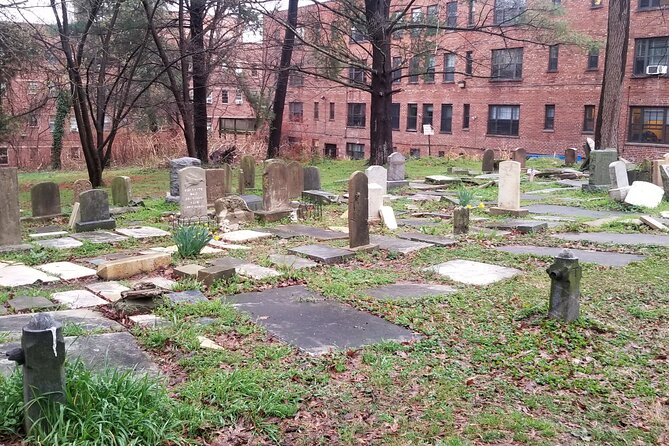
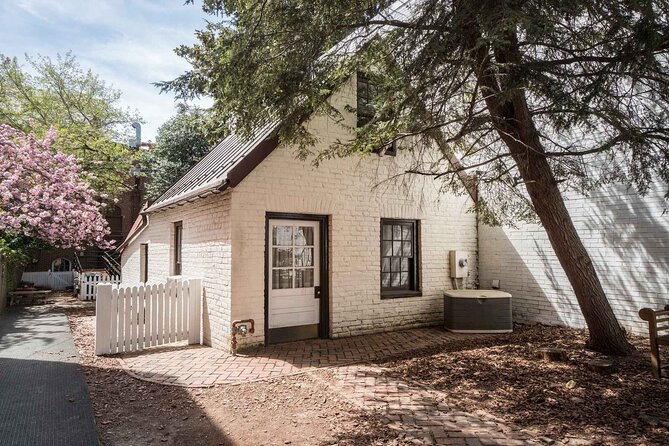
Next you head to Pomander Walk Northwest. Here’s the key detail: Pomander Walk used to be Bell’s Court, owned by Alexander Graham Bell. The tour explains how Bell’s Court reflected the alleyway communities found across DC, where Black residents formed close-knit neighborhoods.
This is the moment where the tour starts feeling extra real. You’re not only seeing a highlight. You’re stepping into the idea of how a city organizes people—who gets space, who gets privacy, and who builds community in narrow in-between areas.
Also, it helps you connect the dots between today’s streets and how they functioned socially in the past. Even if you’ve visited Georgetown before, this stop pushes you to look at the neighborhood layout with history goggles on.
Stop 3: Thomas Sweet for a breather and a bathroom reset
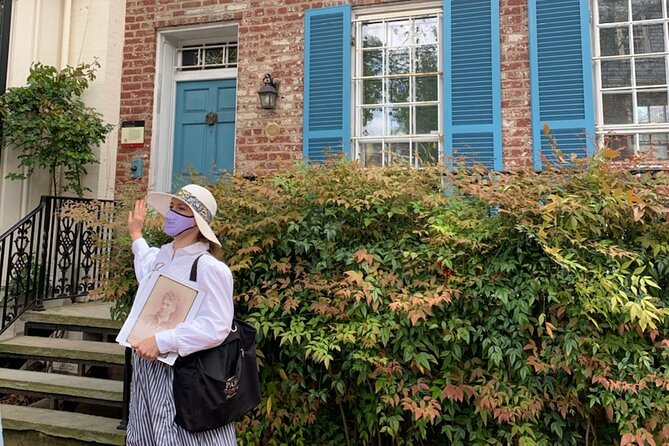
After the first set of stops, the tour gives you a practical break at Thomas Sweet. It’s scheduled as a half-way stop, with about 15 minutes for refreshment and a bathroom break.
This matters more than you might think. Two hours of walking can feel longer when you’re pressed for a restroom option, especially if you’re planning around weekend crowds. Having a built-in reset keeps the rest of the tour more comfortable.
If you care about keeping energy steady, this is also the time to grab water or a small snack. The tour doesn’t mention coffee/tea being included, so treat Thomas Sweet like your chance to power up.






Stop 4: 3146 O St NW and the idea of holding pens
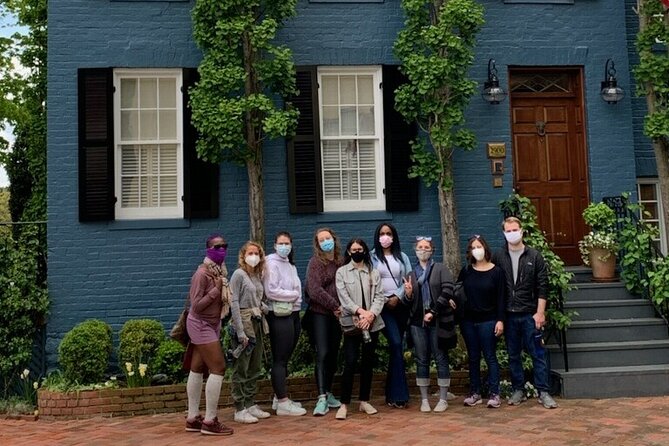
Back on O St NW, you’ll stop at 3146 O St NW. The row houses here are described as having served as holding pens for enslaved people. The tour also notes that the pens were later torn down by an Irish entrepreneur who spent their childhood as an indentured servant in the West Indies.
This stop can hit hard, but it’s important. You’re learning how systems operated locally—not just in faraway history books. The fact that the structures were later removed is part of the lesson too: communities can be physically altered, yet the historical record still deserves attention.
What you should do: slow down here. Let the information land. It’s the kind of stop where the story becomes personal even if you came in neutral.
The Emma Brown stop: education leadership in Georgetown’s orbit
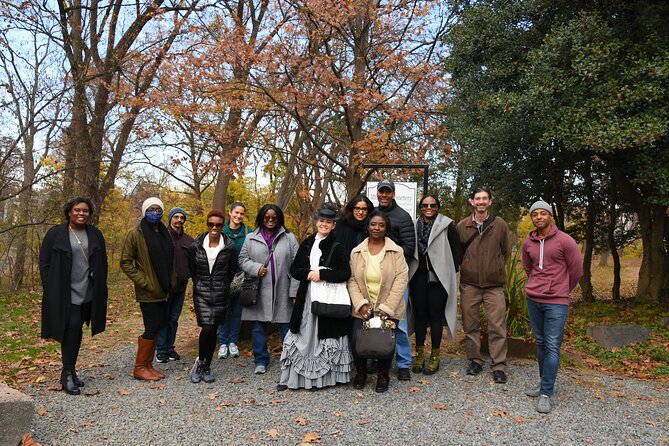
You’ll also pass by the house of Emma Brown. The tour explains that Emma Brown was one of the first Black teachers in DC to reach the level of principal.
Why it’s a strong stop: it pulls the story forward into education and leadership. After the heavier stops, this gives you a different angle—how people built institutions through teaching, training, and responsibility.
Even without long formal museum-style interpretation, the connection to a specific home makes it feel more immediate than a general biography.
Stop 5 and 6: Mount Zion United Methodist Church and Rose Park rallies
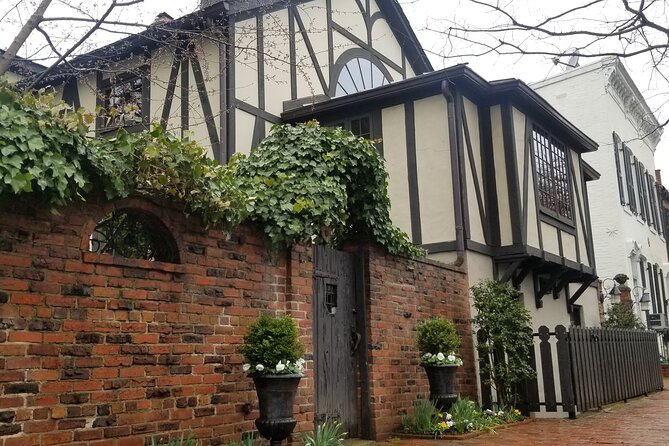
The tour continues at Mount Zion United Methodist Church on O St NW. It’s described as one of the oldest Black congregations in Georgetown.
Then you move to Rose Park, explained as a site of numerous political rallies and community gatherings for the Black community in Georgetown.
Taken together, these stops show how worship and organizing often went hand in hand. Churches weren’t only spiritual centers. They were meeting points, safety nets, and organizing ground—especially in neighborhoods where political voice could be harder to access.
If you like learning how communities made change with what they had, this is one of the more satisfying pairs of stops on the route.
Stop 7: The Mount Zion and Female Union Band Society Cemeteries
The tour ends at the Mount Zion and Female Union Band Society Cemeteries area. This is described as the oldest cemetery in Georgetown, and it includes the remains of enslaved and free Black citizens.
Ending here gives the tour a grounded finish. It’s a reminder that history wasn’t only recorded in newspapers or laws. It’s also held in burial grounds and in who gets remembered—or not remembered—through time.
If cemetery grounds make you uncomfortable or emotional, that’s normal. You can still respect the space while letting it affect you. This is where the tour’s message sticks hardest: community history includes everyone.
Guide quality and the small-group feel (Katie’s pacing really matters)
A big reason people rate this tour so highly is the way the information is delivered. Guide Katie is described as well read and personable, with great pacing and lots of extra facts added in naturally.
In practical terms, that means you’re more likely to remember what you learned. You’re not just hearing dates. You’re being shown connections—between street layouts, institutions, and how Black Georgetown built community through churches, schools, parks, and even the hidden everyday spaces like alley communities.
The group stays small: maximum 20 travelers. That’s a sweet spot. Large enough to feel like you’re with other people, small enough that the tour doesn’t turn into a shouting match.
Price and value: why $30 feels fair for a 2–2.5 hour story walk
The price is $30 per person for about 2 to 2.5 hours with an experienced guide and over 2 hours of historic information. Many stops have free admission, so you’re paying mainly for the guide’s storytelling and interpretation.
That’s the key value question: does the guide transform the neighborhood from scenery into meaning? The structure here suggests yes—short stops at specific locations, then context that explains why each place matters.
Is it perfect value if you only want casual sightseeing? Probably not. If you want a photo-only Georgetown walk, you could DIY the area for free. But if you want the neighborhood to make sense, $30 is a reasonable price for what you’re getting.
You’ll still want to handle your own extras. Coffee/tea isn’t included, and Thomas Sweet is your scheduled refreshment option. Also, wear shoes you can walk in comfortably for the full route.
Who should book this Black Georgetown tour—and who might skip it
You should book if you:
- enjoy history that connects directly to street-level landmarks
- want a calmer, small-group walking experience
- like guides who can add context and explain what you’re seeing, not just point it out
- are okay covering the slave trade and related local evidence connected to holding pens
You might skip if you:
- don’t want to walk for about 2–2.5 hours
- prefer tours that stay mostly light and purely sightseeing-focused
- need coffee included or lots of long sit-down breaks (you’ll only have the scheduled stop at Thomas Sweet)
If you’re planning ahead, note that this tour is booked on average about 47 days in advance, so it’s smart to reserve sooner rather than later.
Should you book Black Georgetown: The History Tour?
Yes, I think you should book this if you care about real DC history told through real locations. This is the kind of tour that makes Georgetown feel broader than the usual postcard version.
It’s also a good choice for repeat visitors. Even locals can get new information when the story is tied to specific places like Healy Hall, Bell’s Court, Rose Park, and the cemeteries at the end. And with a guide like Katie delivering it with pacing and personality, you’re not just collecting facts—you’re building a clearer picture of the neighborhood.
Bring comfortable walking shoes, plan to stop at Thomas Sweet for a bathroom reset, and be ready for topics that are honest and sometimes heavy. If that works for you, you’ll leave with Georgetown that feels real.
FAQ
How long is the Black Georgetown walking tour?
It runs for about 2 hours to 2 hours 30 minutes.
How much does the tour cost?
The price is $30.00 per person.
Where does the tour start?
The meeting point is 3206 O St NW, Washington, DC 20007.
Where does the tour end?
It ends at Mount Zion and Female Union Band Society Cemeteries, 2501 Mill Rd NW, Washington, DC 20007.
Is the tour offered in English?
Yes. It’s offered in English.
Is there a bathroom and refreshment stop?
Yes. There’s a half-way stop at Thomas Sweet with about 15 minutes for refreshment and a bathroom break.
Is coffee or tea included?
No. Coffee and/or tea are not included.
How big is the group?
The tour has a maximum of 20 travelers.
Is free admission included at the stops?
The tour notes show admission ticket free for the listed stops.
What’s the cancellation policy, and does weather affect the tour?
You can cancel for a full refund up to 24 hours in advance. The tour requires good weather; if it’s canceled due to poor weather, you’ll be offered a different date or a full refund.