REVIEW · WASHINGTON DC
The Smithsonian National Air & Space Museum Exclusive Guided Tour
Book on Viator →Operated by Babylon Tours DC · Bookable on Viator
Spacesuits and moon rocks in a guided sprint. That’s the hook of the Smithsonian National Air & Space Museum exclusive tour, and it’s a smart way to see major artifacts with context while Washington’s most popular museum stays packed. You get a guide who leads you past the crowds and aims you at the big wow items—from Buzz Aldrin’s spacesuit and Apollo 11 gear to moon boots and moon rocks—without wandering for hours.
Two things I really like: first, you choose between small-group or private settings, so the pacing feels more tailored than a free-for-all. Second, you’re building a story as you walk, so the exhibits connect—early flight, the Space Race, and today’s astronaut experience—rather than sitting there as random objects.
One caution: the Air & Space Museum is in long-term renovation, so some exhibits may be unavailable and your route can change. That can actually be useful (your guide works with what’s open), but if you have a must-see artifact, you’ll want to check what’s currently on view before you go.
In This Review
- Key things to know before you go
- Your 2.5-Hour Jump-Start at Air & Space Museum
- How the Renovation Changes What You See
- The Hallway Highlights: From Wright Flyer to Moon Landings
- Spacesuits, Moon Boots, and Apollo-Era Storytelling
- Aviation History Stops That Matter More Than You Think
- What the Guide Adds (And Why It’s Worth Paying for)
- Plan for Security, Bags, and Comfort Inside the Museum
- Price and Value: What You’re Actually Buying for $89.67
- Who This Tour Fits Best (and Who Might Skip It)
- Should You Book This Air & Space Guided Tour?
- FAQ
- FAQ
- What time does the tour run?
- Where do I meet the guide?
- How much does it cost?
- Is admission included?
- What should I know about the museum renovation?
- Are hotel pickup and drop-off included?
Key things to know before you go
- Guaranteed timed entry to a top DC attraction so you’re not stuck playing ticket roulette
- Guide-led routing designed to get you past the busiest areas fast
- Renovation-aware itinerary that adapts to what’s open during your visit
- Signature artifacts on the target list, including Wright Flyer and Apollo-era items
- Story-driven highlights across aviation history, NASA, and moon landings
- Smart gift-shop add-on if you want the freeze-dried astronaut ice cream (own expense)
Your 2.5-Hour Jump-Start at Air & Space Museum
The tour meets at 600 Independence Ave SW in Washington, DC, right at the museum’s front door zone where timed arrivals make a big difference. You can pick a morning or afternoon start time, which matters in DC where the rest of your day can snowball fast. The tour runs about 2 hours 30 minutes, and it’s offered in English.
This is built for people who want the highlights but also want the “why.” The guide doesn’t just point. You’ll stop at major exhibits, get the story behind them, and keep moving at a pace that fits a finite visit. In a museum this huge, time is the real luxury.
Another value piece: the tour is set up as a guided museum experience with a tour guide handling navigation and timing. Even when the museum is busy, your entry is scheduled, so you’re not relying on luck or fighting the clock.
You can also read our reviews of more guided tours in Washington DC



How the Renovation Changes What You See
Here’s the reality check that will make your expectations line up with the day: the Air & Space Museum is under massive construction for multiple years. That means many exhibits described for the tour might not be on display during your visit. The route adjusts based on what’s available when you arrive.
Instead of treating that as a loss, use it as a planning tool. Your guide will steer you to what’s open and swap in the best available options. The tour highlights are also written with backup artifacts in mind—for example, it specifically lists backup items like a backup lunar module and Skylab backup pieces—so you still get the mission-story even if certain versions aren’t accessible.
If you like doing homework, check the museum’s now-view page here before you go: https://airandspace.si.edu/exhibitions/now-view
It won’t predict everything a guide can access on the day, but it will help you decide whether you should book now or shift dates.
The Hallway Highlights: From Wright Flyer to Moon Landings
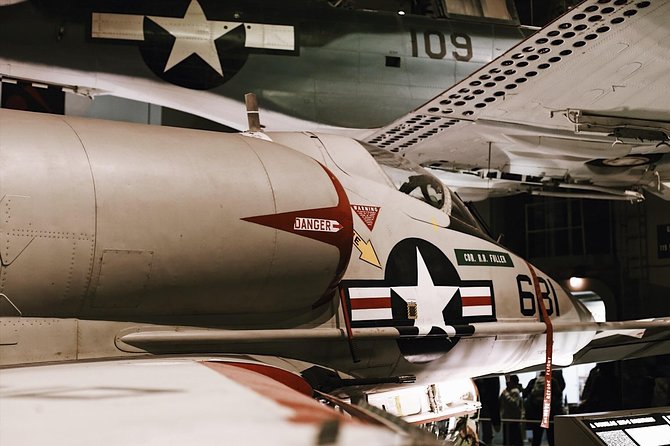
This tour is organized around the idea that aviation and space are one continuous story. You start at the National Air and Space Museum and work through flight milestones and NASA-era breakthroughs, hitting the moments that shaped how humans got from takeoff to landing on the moon.
On the target list, you’ll see (when available) major original artifacts such as:
- Wright Flyer (original)—the first successful heavier-than-air powered aircraft
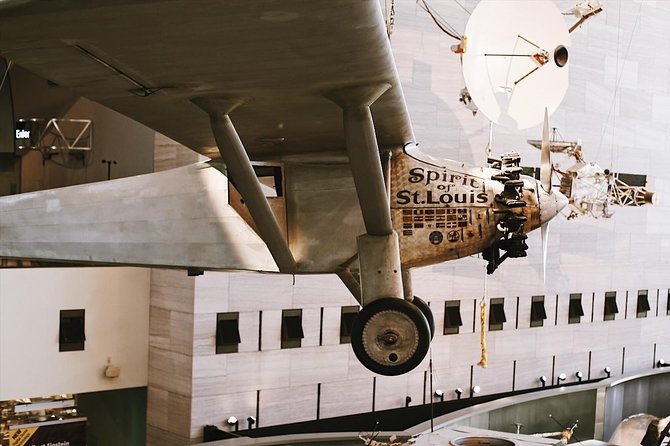
- Charles Lindbergh’s Spirit of St. Louis (original)—the first aircraft to cross the Atlantic
- Chuck Yeager’s Bell X-1 (original)—linked to breaking the sound barrier
- John Glenn’s Mercury capsule (original)—a key early U.S. space landmark
- Neil Armstrong Apollo 11 spacesuit (original)—the iconic suit tied to the mission story
- Apollo 11 module—part of the moon-landing narrative
- Hubble Telescope (test vehicle)—a close-up way to understand the hardware concept
- Skylab (America’s 1st space station backup)—a prime stepping-stone between early missions and longer stays
- Space Shuttle’s mid deck (model)—a hands-on look at what living and working in orbit felt like
What you gain from a guide here is pacing. You’re not just walking past big objects. You’re getting the timeline built in real time—what changed, what it enabled, and why it mattered. Even if you’ve read about the Space Race before, the guide’s linking of moments can turn it from trivia into a clear arc.
Spacesuits, Moon Boots, and Apollo-Era Storytelling
If you’re coming for the moon stuff, you’re in the right place. The tour calls out moon boots and moon rocks, plus spacesuits connected to Apollo-era history. It also specifically names Buzz Aldrin’s spacesuit in the tour overview, and the artifact list includes the Neil Armstrong Apollo 11 spacesuit. Either way, you’re getting the same theme: these weren’t just props. They’re the point where engineering met human survival.
Your guide will also explain the Space Race and moon landings in a way that’s built for a timed visit. The goal is to help you understand the leap from flight to spaceflight and the tension of the era—why landings were so urgent, so public, and so celebrated.
There’s also an actual “today” angle. The guide will talk about what it’s like to be an astronaut today, which adds perspective beyond the historical wow. You’re not leaving with only old photos in your head—you’re connecting the past to the modern version of the same dream.
And yes, there’s a fun optional stop in the museum gift shop: freeze-dried ice cream astronauts enjoy. It’s own expense, but if you want a small hands-on moment that matches the theme, it’s a nice capstone. It won’t replace the exhibits, but it turns the story into a memory.
Aviation History Stops That Matter More Than You Think
One reason I like guided museum tours is that they prevent you from turning your brain off. Here, the guide’s job is to show how early aviation experiments and breakthroughs set up later space achievements.
You’ll cover items tied to the earliest days of flight and the long path to reliable powered aircraft. The tour’s lineup also includes stops for Amelia Earhart, so you get more than the tech story—you get human ambition and the risks tied to global flight attempts.
Then it swings back to the U.S. space program, stitching together NASA’s major milestones through artifacts like Mercury-era hardware and Apollo mission components. You’ll also hear about NASA and the United States’ space program as a technological story: what problems had to be solved, and how the solutions shaped the next leap.
If you’re visiting with kids, this kind of structure helps. One of the most consistent strengths in the guide style described in the experience is keeping the group engaged and asking questions, not just delivering facts. That’s how a museum visit stays fun instead of becoming museum homework.
You can also read our reviews of more museum experiences in Washington DC





What the Guide Adds (And Why It’s Worth Paying for)
You’re paying $89.67 per person for the guide, the timed entry, and the “don’t make me figure this out” benefit. In plain terms: a guide helps you see more and understand more in less time.
The strongest theme across the experience is how the guide turns objects into a story. Different guides show different flavors—some bring more humor and fast pacing, others go heavy on mission detail—but the common thread is that your tour doesn’t feel like a script. You’re guided to the right places, and the guide uses stops to build understanding instead of just ticking boxes.
You can also choose the type of tour experience. The “exclusive” angle matters for the setup where the guide is for your group, and it can affect wheelchair friendly coverage. If you go with the option that doesn’t include exclusivity, you may feel more like a group in a standard tour, less like you’re driving your own learning track.
If you’re the kind of person who thinks museum plaques are okay but not enough, you’ll appreciate how the tour guide fills the gaps with real context—especially with how early aviation connects to later NASA missions.
Plan for Security, Bags, and Comfort Inside the Museum
This museum runs on security rules like most major attractions in DC, and it’s worth planning ahead so your tour doesn’t start with stress.
A few practical notes from the experience details:
- Appropriate dress is required for entry into some sites on the tour
- No large bags or suitcases are allowed inside the museum; only handbags or small thin bag packs go through security
- The museum has quiet or restricted areas where speaking is limited—your guide will brief you before entering
- The tour expects a moderate physical fitness level
- The tour is listed as wheelchair friendly, but that does not apply if you choose the SAVE! BOOK SEMI-PRIVATE option
Also, you need to provide a mobile phone number (with country code). That’s not glamorous, but it’s one of those “do it right the first time” requirements that prevents last-minute hassles.
Price and Value: What You’re Actually Buying for $89.67
Let’s talk value without pretending it’s cheap.
$89.67 per person isn’t just paying for entry—museum entry is shown as free in the tour details. What you’re paying for is the time-saving and understanding layer: a guide to navigate this huge museum, timed access, and a focused route built around key artifacts.
This can be a great deal if:
- you have limited time in DC and want a hit list of the best exhibits
- you don’t want to spend your energy figuring out what’s open during renovation
- you care about history enough to want the connections, not just the objects
- you’re traveling with kids and want a pace that holds attention
It may feel less worthwhile if:
- you’re an independent museum wanderer who loves slow reading at your own tempo
- you’re happy to hunt for highlights without a guide
- you’re visiting when you know exactly which exhibits you want and you’re comfortable building your own route
The renovation factor is the wild card. It can reduce what you see, but the guide is there specifically to make the best use of what’s available during construction.
Who This Tour Fits Best (and Who Might Skip It)
This is a strong fit for first-timers to Washington DC who want to experience the Air & Space Museum without getting stuck in lines, confusion, or option overload. It’s also a good match for families. The tour structure and guide style described for this experience often work well for mixed ages—especially when the guide keeps questions moving and stays patient with different attention spans.
Space and aviation fans will like the artifact list and the fact that the tour connects the tech to the human stories. If you’re more casual—just wanting a quick taste of the moon theme—you might still enjoy it, but you’ll get the most value when you’re ready to listen to the “how did we get here” explanation.
If you’re extremely set on seeing one specific item no matter what, don’t book blind. Use the museum’s now-view list and treat the guided plan as a smart route to the highlights, not a guarantee of every single exhibit on earth.
Should You Book This Air & Space Guided Tour?
I’d book it if you want a focused, timed way to see major artifacts and understand the story behind them—especially during a renovation period when getting a smart route is the difference between a great day and a scattered one. The pricing makes sense when you value guidance, pacing, and reduced stress.
I’d skip or reconsider if you’re happy going solo, you have lots of time, and you don’t mind spending your visit reading plaques and figuring out the museum flow on your own. In that case, you might prefer a self-guided approach.
FAQ
FAQ
What time does the tour run?
The tour duration is about 2 hours 30 minutes, and it offers morning or afternoon start times.
Where do I meet the guide?
You meet at 600 Independence Ave SW, Washington, DC 20560, USA. The tour ends back at the meeting point.
How much does it cost?
The price is $89.67 per person.
Is admission included?
The tour details list admission as free (Admission Ticket Free). The tour price covers the guided experience.
What should I know about the museum renovation?
The museum is under massive construction for multiple years, and many exhibits may not be on display. The tour is adjusted based on what’s available during your visit. You can check the museum’s now-view page for updates.
Are hotel pickup and drop-off included?
No. Hotel pickup or drop-off is not included. The experience recommends using Uber or a taxi.